Evidence-based · Peptides

CJC-1295 With vs Without DAC: What the Difference Actually Is
The DAC changes half-life from minutes to days. Here is what that means, and why the human evidence is thinner than the marketing implies.
Part ofThe Research-Peptide Directory→CJC-1295 is sold in two forms that look nearly identical on a label but behave very differently in the body. One carries a “DAC” (Drug Affinity Complex); the other, sold as CJC-1295 without DAC — also called modified GRF 1-29, or mod-GRF 1-29 — does not. Both are analogues of growth-hormone-releasing hormone (GHRH), the signal that tells the pituitary to release growth hormone (GH). The single structural difference between them drives almost everything that matters about dosing, timing, and the GH pattern each produces.
The DAC is the whole story
The DAC is a chemical add-on — a maleimidopropionamide group on a lysine at the peptide’s C-terminus — that reacts with the free thiol on cysteine-34 of serum albumin, the most abundant protein in blood. Jetté and colleagues at ConjuChem described that chemistry in Endocrinology in 2005, and showed by Western blot that after a single injection in rats the peptide travels attached to the albumin band, still there beyond 24 hours. That tether keeps the molecule circulating instead of being cleared within minutes.
In the pivotal early human study — Teichman and colleagues, published in the Journal of Clinical Endocrinology & Metabolism in 2006 — CJC-1295 with DAC had an estimated half-life of 5.8 to 8.1 days in healthy adults. A single injection raised mean GH by roughly 2- to 10-fold for six or more days and IGF-1 by 1.5- to 3-fold for 9–11 days; after multiple doses, mean IGF-1 stayed above baseline for up to 28 days. The trials were two randomised, placebo-controlled, double-blind ascending-dose studies of 28 and 49 days in healthy adults aged 21–61.
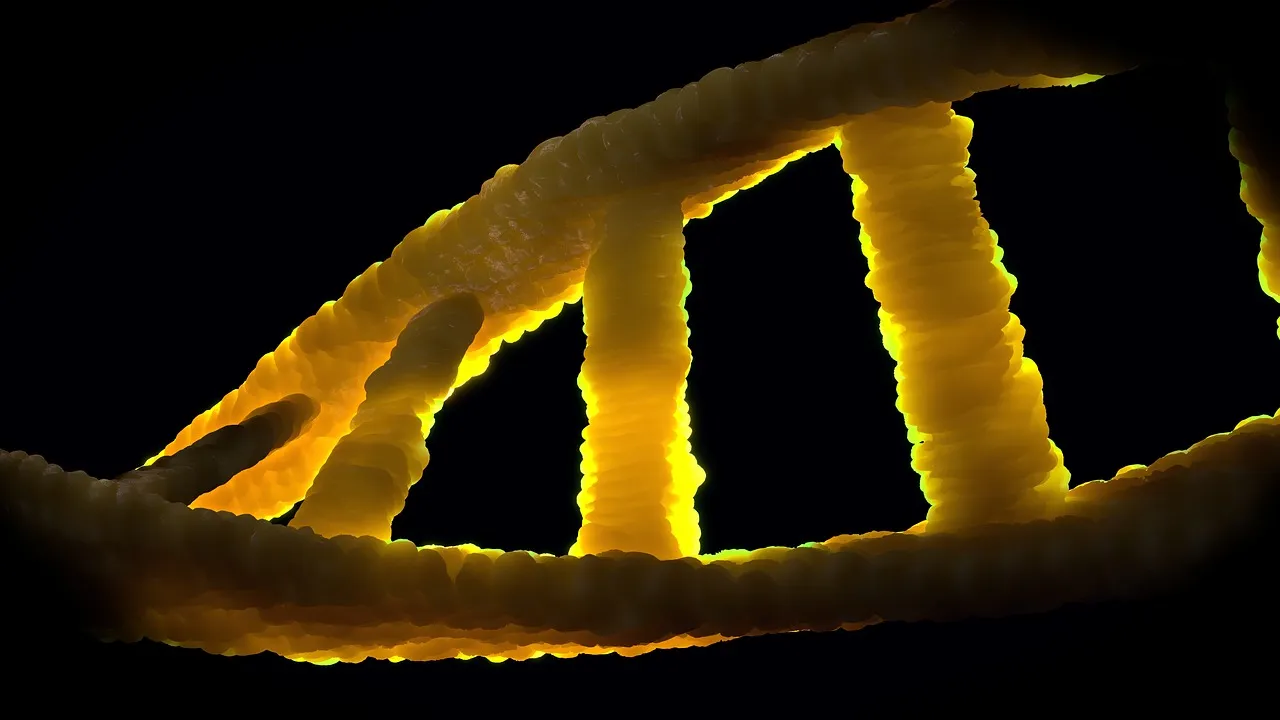
The DAC extends CJC-1295’s half-life to a measured 5.8–8.1 days in healthy adults. The no-DAC version has no albumin anchor and clears in minutes — but no published human pharmacokinetic study of it exists, so the widely quoted “about 30 minutes” is a number without a paper behind it.
That second half deserves stating plainly, because the dosing charts online treat it as settled. The closest human measurement anyone has published is for a partial version of the molecule: Soule, King and Millar infused GHRH(1-29)-NH₂ and its D-Ala² analog into ten normal men and reported disappearance half-times of 4.3 minutes and 6.7 minutes respectively. In rats, a set of D-amino-acid-substituted GRF(1-29) analogs had half-lives of 4.7–7.4 minutes, none significantly different from the 6.2-minute parent. Nothing in that literature supports half an hour, and none of it tested the fully tetrasubstituted mod-GRF 1-29 in people.
What is not in dispute is the shape: without the albumin anchor the peptide produces a short, sharp GH pulse that fades fast, closer to the body’s natural pulsatile secretion. That is why mod-GRF 1-29 is dosed frequently and usually paired with a GH-releasing peptide such as ipamorelin to amplify each pulse.

DAC vs No-DAC at a glance
| CJC-1295 with DAC | CJC-1295 without DAC (mod-GRF 1-29) | |
|---|---|---|
| Half-life | 5.8–8.1 days, measured in healthy adults (Teichman 2006) | Never measured in humans. Nearest data: 6.7 min for a D-Ala² GHRH(1-29) analog in 10 men (Soule 1994) |
| Dosing frequency | Weekly / biweekly | Multiple times daily |
| GH pattern | Sustained, days-long “bleed” | Brief, pulsatile spike |
| Typically paired with | Used alone | A GHRP (e.g. ipamorelin) |
| Human evidence | Early-phase PK/safety only | Essentially none directly |
Why it matters
The sustained “GH bleed” from the DAC version is often marketed as an advantage, but constant elevation departs from the natural pulsatile rhythm that a short-acting peptide preserves — and it is not clear that either pattern delivers the body-composition or anti-aging results commonly claimed.

The honest picture is that human data is very limited. What exists is mostly early-phase pharmacokinetic and safety work on the DAC form, showing it raises GH and IGF-1 — not that it improves fat loss, muscle, recovery, or longevity.
Development also stopped. The registry record is unambiguous: ConjuChem’s Phase 2 study of CJC-1295 in HIV-associated visceral obesity (NCT00267527), a randomised, placebo-controlled, double-blind trial that enrolled 120 patients, ran from December 2005 and is listed on ClinicalTrials.gov as terminated in September 2006. The registry does not state a reason, and no later-phase trial of the compound appears there. CJC-1295 is not FDA-approved for any use — it returns no match in FDA’s drug approval database — and WADA’s 2026 Prohibited List names it explicitly under S2.2.4, growth hormone releasing factors, a class prohibited at all times, in and out of competition.
The takeaway
The DAC is the only meaningful difference, and it is a big one: it converts a fleeting GH pulse into a multi-day elevation, which is why the two versions are dosed so differently. But “different pharmacokinetics” is not “proven benefit.” For either form, controlled human outcome data is absent, neither is FDA-approved, and both are banned in sport. Treat the confident dosing charts online as marketing, not evidence.
Sources
- Teichman SL et al., “Prolonged stimulation of growth hormone (GH) and insulin-like growth factor I secretion by CJC-1295, a long-acting analog of GH-releasing hormone, in healthy adults,” J Clin Endocrinol Metab, 2006;91(3):799–805 — abstract read
- Jetté L et al., “Human growth hormone-releasing factor (hGRF)1-29-albumin bioconjugates activate the GRF receptor on the anterior pituitary in rats: identification of CJC-1295 as a long-lasting GRF analog,” Endocrinology, 2005;146(7):3052–8 — abstract read
- Soule S, King JA, Millar RP, “Incorporation of D-Ala2 in growth hormone-releasing hormone-(1-29)-NH2 increases the half-life and decreases metabolic clearance in normal men,” J Clin Endocrinol Metab, 1994;79(4):1208–11
- Rafferty B, Coy DH, Poole S, “Pharmacokinetic evaluation of superactive analogues of growth hormone-releasing factor (1-29)-amide,” Peptides, 1988;9(1):207–9 (rats)
- NCT00267527 — Phase 2 study of CJC-1295 in HIV patients with visceral obesity, ConjuChem; listed as terminated, ClinicalTrials.gov
- WADA 2026 Prohibited List, S2.2.4 growth hormone releasing factors (CJC-1295 named; prohibited at all times)
- Drugs@FDA drug approval records — no match for CJC-1295
References
- Teichman SL et al., "Prolonged stimulation of growth hormone (GH) and insulin-like growth factor I secretion by CJC-1295, a long-acting analog of GH-releasing hormone, in healthy adults," *J Clin Endocrinol Metab*, 2006;91(3):799–805 — abstract read
- Jetté L et al., "Human growth hormone-releasing factor (hGRF)1-29-albumin bioconjugates activate the GRF receptor on the anterior pituitary in rats: identification of CJC-1295 as a long-lasting GRF analog," *Endocrinology*, 2005;146(7):3052–8 — abstract read
- Soule S, King JA, Millar RP, "Incorporation of D-Ala2 in growth hormone-releasing hormone-(1-29)-NH2 increases the half-life and decreases metabolic clearance in normal men," *J Clin Endocrinol Metab*, 1994;79(4):1208–11
- Rafferty B, Coy DH, Poole S, "Pharmacokinetic evaluation of superactive analogues of growth hormone-releasing factor (1-29)-amide," *Peptides*, 1988;9(1):207–9 (rats)
- NCT00267527 — Phase 2 study of CJC-1295 in HIV patients with visceral obesity, ConjuChem; listed as terminated, ClinicalTrials.gov
- WADA 2026 Prohibited List, S2.2.4 growth hormone releasing factors (CJC-1295 named; prohibited at all times)
- Drugs@FDA drug approval records — no match for CJC-1295
Compounds in this article
Stay current
Get evidence-based briefings in your inbox.