Evidence-based · Recovery
Blue Light and Sleep: What the Evidence Actually Says
Evening screen light can delay your clock, but blue-blocking glasses show small, inconsistent effects in controlled trials.
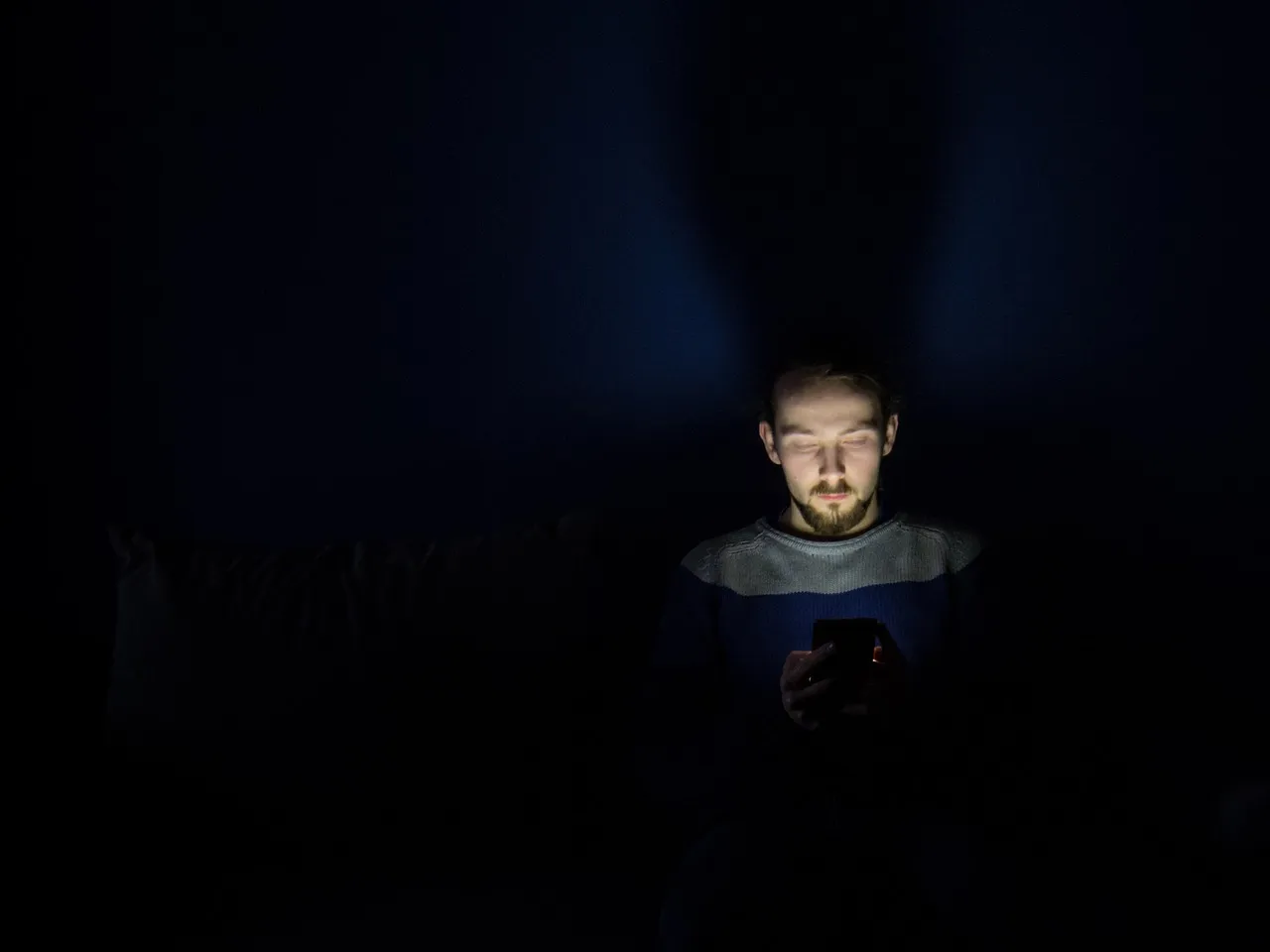
Part ofThe Recovery Guide→The standard advice is tidy: blue light from screens suppresses melatonin, wrecks your sleep, and the fix is amber glasses or a “night mode” toggle. Each piece of that story is partly true. Strung together as a confident causal chain sold with a product attached, it overstates what the controlled evidence actually supports.
What’s solid, and what’s stretched
The well-established part: light — especially shorter, bluer wavelengths — is the dominant signal the circadian clock uses to set its timing, and bright evening light can delay melatonin release and push the body clock later. A frequently cited demonstration is the inpatient crossover study by Chang, Aeschbach, Duffy, and Czeisler, published in the Proceedings of the National Academy of Sciences (PNAS) in 2015. Twelve healthy young adults read either a light-emitting eReader or a printed book for several hours before bed across two 5-night conditions.
In the Chang study, the eReader suppressed evening melatonin by about 55% versus the printed book, delayed dim-light melatonin onset by more than 1.5 hours, and lengthened time to fall asleep by roughly 10 minutes (about 26 vs. 16 minutes).
Those are large effects — but note the conditions. The eReader was held close, used for hours, in an otherwise dim room, with only 12 participants. That is a deliberate demonstration that light can shift the clock, not a measure of a glance at your phone at typical brightness.
What blue-blocking glasses actually do
The leap from “evening light affects the clock” to “wearing amber glasses fixes sleep” is where the evidence thins. A 2025 systematic review and meta-analysis in Frontiers in Neurology pooled three randomized controlled crossover trials of blue-light-blocking glasses worn before bed, totaling just 49 participants, and measured sleep with actigraphy. None of the outcomes reached statistical significance:
| Actigraphic outcome | Pooled mean difference | Significant? |
|---|---|---|
| Sleep onset latency | −4.86 min (95% CI −20.23 to 10.52) | No (p = 0.54) |
| Total sleep time | +8.75 min (95% CI −35.31 to 52.82) | No (p = 0.70) |
| Sleep efficiency | −0.61 pts (95% CI −7.58 to 6.35) | No (p = 0.86) |
The authors’ own summary: the glasses “may provide small improvements in sleep, but current evidence from RCTs does not support significant effects.” Trials are small and protocols vary, so this is genuinely unsettled rather than settled in either direction.
The practical levers
- Dim your environment in the hour or two before bed — overall brightness, not just color.
- Keep screens out of bed if the content keeps your brain switched on; what you do on the device competes with its spectrum.
- Get bright light in the morning; the timing of light matters as much as its color.
The takeaway
Blue light is a genuine input to your circadian system — strong evening exposure measurably delays melatonin and the clock. But the consumer story has outrun the data. Blue-blocking glasses and night-mode settings are low-risk and might help a little, so there’s no harm in using them. Just don’t expect a screen filter to fix sleep that’s really being disrupted by a late bright environment, an erratic schedule, or a mind that won’t put the phone down.
Sources
References
Stay current
Get evidence-based briefings in your inbox.