Evidence-based · Peptides

Which Insulin Syringe Size for Peptides (U-100)
Insulin syringe size comes down to your draw volume. How 0.3 mL, 0.5 mL, and 1 mL U-100 syringes compare, plus gauge and needle-length guidance.
Part ofThe Research-Peptide Directory→If you’re reconstituting peptides, the syringe question looks like a precision question, and the usual advice follows from that: pick the smallest barrel, because more marks in the same physical length means each unit is easier to read. The mechanics of that are real. The measured benefit is not — and the studies that looked for it are the reason this page carries a mixed confidence badge rather than a confident one.
Insulin syringes are the standard tool because they’re marked in units on the U-100 scale, which is the same scale peptide dosing conventions use. If you’re still shaky on what a “unit” is versus a milliliter or microgram, start with peptide dosing units explained — this article assumes you know your target draw in units and just need to pick hardware.
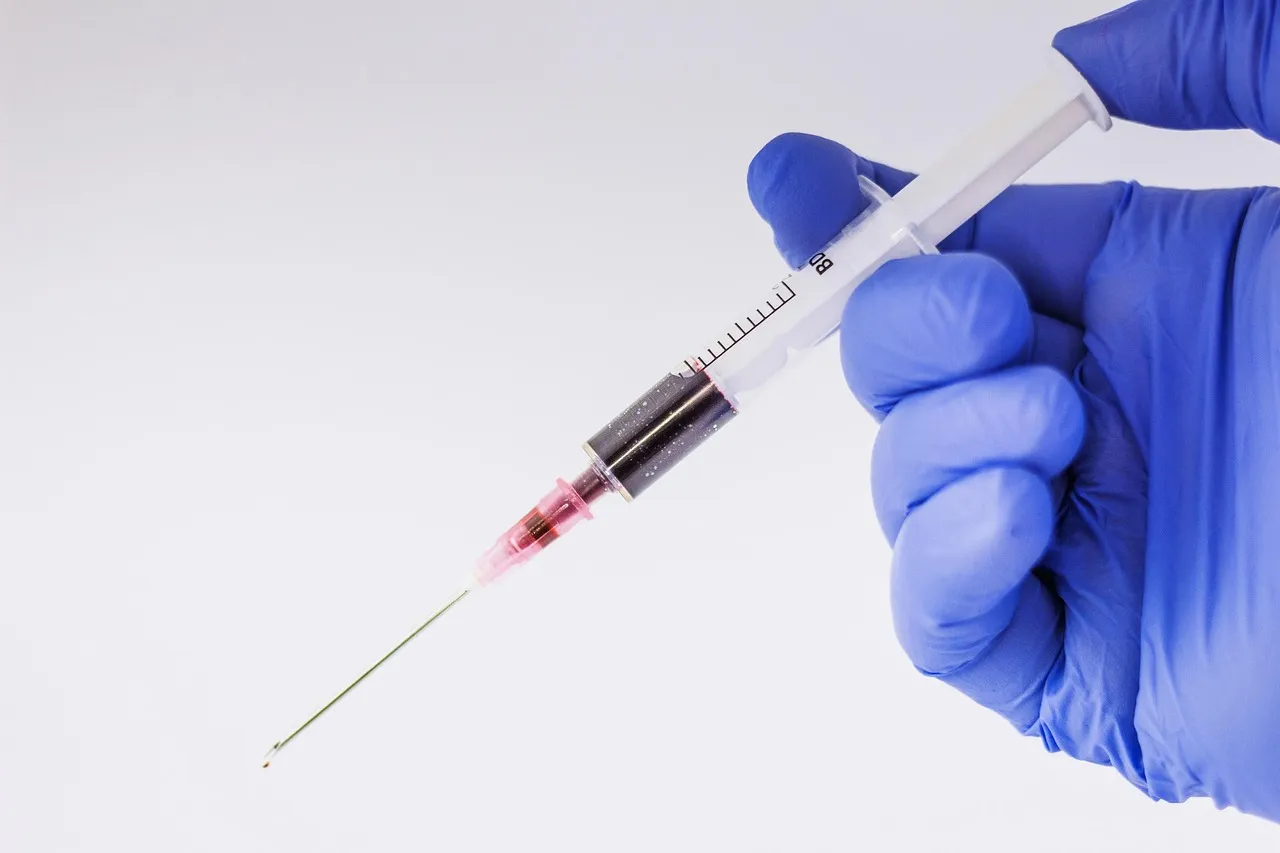
What are the three U-100 syringe sizes?
There are three standard barrel sizes, and a 2023 review in Clinical Diabetes states them plainly: insulin syringes come in 0.3, 0.5, and 1.0 mL sizes holding up to 30, 50, and 100 units respectively. Every one uses the same rule — 100 units = 1 mL, so 1 unit = 0.01 mL.
| Barrel | Max capacity | Fits a draw of | Notes |
|---|---|---|---|
| 0.3 mL | 30 units | up to ~30 units | Half-unit-marked versions are FDA-listed |
| 0.5 mL | 50 units | 30–50 units | Half-unit-marked versions are FDA-listed |
| 1.0 mL | 100 units | over 50 units | The only barrel that holds a large draw |
Marking intervals are not standardized across manufacturers the way capacities are, so the table above doesn’t claim one. Read the barrel you actually own. What is consistent is the geometry: a 0.3 mL barrel spreads 30 units across the full length of the syringe, while a 1 mL barrel spreads 100 units across a similar length. Drawing 8 units on a 1 mL syringe means eyeballing a spot near the very bottom; on a 0.3 mL syringe, 8 units sits further up a coarser scale.
What happened when someone measured it
The readability argument is intuitive, and two groups have tested whether it survives contact with a scale. Both weighed what people actually delivered.
In a 1993 Pediatrics study, nurses and parents of children with diabetes tried to deliver 0.5, 1.0, and 2.0 units of U-100 insulin. Aiming for 1.0 unit, nurses delivered 1.638 ± 0.376 units. The authors state the result directly: using 0.3 mL syringes instead of 0.5 mL syringes did not improve accuracy or precision. They concluded that below 2 units, the error with available syringes is unacceptably large. A 2004 Clinical Pediatrics study reached the same place from a different direction — syringes with half-unit increment markings were no more accurate or precise than syringes without them, and both were substantially worse than pens and pumps at 1 and 2 units.
Two studies looked for a measurement advantage from the smaller barrel and from half-unit markings, at doses of 0.5 to 2 units. Neither found one. The error that mattered was in the hand, not on the scale.
The honest scope limit runs the other way too. Both studies tested doses of 2 units and under, far below the 5–30 unit range a typical reconstituted peptide draw falls in, and neither examined whether the smaller barrel helps at 10 or 20 units. So the fair statement is: at the very smallest doses the smaller barrel demonstrably does not help, and at peptide-sized draws nobody has checked. That is a thinner basis than the confident advice circulating on this topic implies.
Matching size to your draw
Because concentration determines how many units a given dose becomes, your draw volume depends on how you reconstituted the vial. Work out the draw first — the peptide reconstitution calculator turns your vial size, water volume, and dose into a unit figure — then pick a barrel that holds it:
- Draw is under 30 units → 0.3 mL syringe fits it.
- Draw is 30–50 units → 0.5 mL syringe.
- Draw is over 50 units → 1 mL syringe, the only one with the capacity.
One practical rule, offered as handling mechanics rather than as a sourced recommendation: don’t run right at a syringe’s maximum. If your dose is 29 units, a 0.3 mL syringe technically fits it, but you’re at the very top of the barrel with no room for adjusting a bubble. Sizing up a step in that situation is reasonable.
And if your draws are consistently landing on awkward between-mark numbers, the fix often isn’t a different syringe — it’s re-reconstituting at a concentration that puts your dose on a whole unit. That’s a reconstitution decision, not a hardware one.
Needle gauge and length
Two more numbers appear on the label, and they’re independent of barrel size.
Gauge is needle thickness, and the scale is backwards: a higher gauge number means a thinner needle. The Clinical Diabetes review gives the range for insulin syringes as 28 to 31 gauge, with 31 the finest. Thinner needles are generally more comfortable; very thin needles can be slightly slower to draw thick solutions.
Length matters for injection depth. The same review gives typical insulin syringe needle lengths as 5, 6, 8, and 12.7 mm (3/16, 5/16, 8/16, and 1/2 inch). The 4 mm figure often quoted alongside these is a pen needle length, not a syringe one — worth knowing before you go looking for a 4 mm syringe.
On how short is short enough, there is a real guideline behind the folk advice. The International Scientific Advisory Board for the Third Injection Technique Workshop concluded in 2010 that “there is no medical reason to recommend a needle length longer than 8 mm,” and recommended 4-, 5-, and 6-mm needles for all adult patients regardless of BMI. The 2016 FITTER recommendations, written and vetted by 183 diabetes experts from 54 countries and published in Mayo Clinic Proceedings, put it as: the shortest needles — currently the 4 mm pen and the 6 mm syringe needle — are safe, effective, less painful, and should be first-line in all patient categories. Two caveats belong with that. FITTER’s authorship includes employees of a needle manufacturer, which is disclosed in the paper. And a 2015 Diabetes Spectrum article argues the opposite edge case: patients with higher BMI or coordination-limiting conditions such as arthritis may still be better served by a longer needle. Barrel size and needle length are sold in various combinations, so a small 0.3 mL barrel with a short 31G needle is an available pairing.
What does “U-100” actually guarantee?
Sticking to U-100 syringes matters because it keeps one variable constant: the 100 units = 1 mL scale. All peptide-dosing rules of thumb (“X units of a Y mg/mL solution”) silently assume U-100. U-40 and U-500 syringes exist for specific insulin concentrations and use different scales — using one by accident would throw every unit-based calculation off. For peptide work, U-100 is effectively the only correct choice, and it’s what our peptide dose converter assumes when it moves between mcg, mg, mL, and units.
Quick decision guide
| If your draw is… | Use | Why |
|---|---|---|
| Under 30 units | 0.3 mL U-100 | Finest markings, best small-draw precision |
| 30–50 units | 0.5 mL U-100 | Fits without maxing out |
| Over 50 units | 1.0 mL U-100 | Only barrel that holds it |
| Very small micro-doses | 0.3 mL with ½-unit marks | Half-unit resolution |
Frequently asked questions
What size insulin syringe should I use for peptides?
Match the barrel to your draw volume. The smallest syringe your dose fits in gives the finest gradations and the least measurement error.
What does U-100 mean on a syringe?
That the barrel is graduated for insulin at 100 units per mL — so one unit is 0.01 mL. The units measure volume, not drug: 10 units is 0.1 mL of whatever is in the vial.
Is a 0.3 mL syringe better than a 1 mL?
For small draws, yes — the markings are further apart, so the same reading error costs less volume. For draws that exceed 0.3 mL it forces multiple injections, which is worse.
What needle gauge and length are used?
The article covers the common combinations. Gauge and length affect comfort and depth rather than dose accuracy, which is set by the barrel graduations.
The takeaway
For most peptide reconstitution, a 0.3 mL U-100 syringe is the default, because peptide draws are small and small barrels read most accurately — reserve 0.5 mL and 1 mL for larger volumes. Match the barrel to your calculated draw (worked out via the peptide reconstitution calculator), pick a short, high-gauge needle for comfort, and stay on the U-100 scale so your unit math stays valid. As always: most research peptides are not approved for human use, and choosing a syringe is a measurement decision, not an endorsement of self-injection.
References
- Insulin Syringes Sizes and Lengths — Healthline — 0.3/0.5/1.0 mL barrel capacities and marking intervals, common gauges (28–31G) and needle lengths (4–8 mm), and the guidance not to run at a syringe’s maximum capacity.
Stay current
Get evidence-based briefings in your inbox.